
Well, we’ve reached the end of another college football season, my first as a blogger. And what a season to start blogging about Navy football. We had a new supe, some crazy games, wins over Pitt and Notre Dame, the departure of Paul Johnson, the promotion of Ken Niumatalolo, another CIC Trophy, and a trip to San Diego. Lucky me, I guess; there was never a shortage of stuff to write about. It’s probably going to be a challenge to find the same kind of interesting topics for a while, not that anyone’s confusing this blog with Pulitzer material to begin with. But it has been fun so far. Thanks to those of you who have found it worth reading. There will still be plenty of football items to write about for the next few months, with new coaches joining the staff, recruiting, and spring practice on the way. But before all of that, I thought I’d wrap up the 2007 season with a sort of “state of the union” series. Navy isn’t in a conference, obviously, but their relationship with the other service academies comes pretty close to those of conference members. Because of that, I thought it would be good to look back on each team’s season, take an early glance at next year, and evaluate how well Navy will stack up with the two teams they measure themselves against the most. We’ll start with Army.
I think there’s a point in time when you feel like it’s your time to retire, and I think I’ve reached that time. I think there is an issue of having a certain degree of energy, which I feel is important for anyone leading a college football program. I feel that I was lacking in that area as well. I don’t feel that it would be fair to our administration, our staff or our players, to give less than the full capacity the job requires.
Those were Bobby Ross’ words nearly a year ago as he stepped down as Army’s head football coach. There had been rumors throughout the 2006 season that Ross would retire. As the weeks following the season finale against Navy rolled by without an announcement, though, it appeared likely that the veteran coach would return for a fourth season at the helm of the Black Knights. Speculation ended when Ross retired suddenly on January 29.
The timing of Ross’ decision put Army AD Kevin Anderson in a bind. By that time, most of the hiring and firing in the annual coaching carousel had already taken place. Coaches weren’t looking to move into new jobs; they were looking to settle into the jobs they were just hired for and begin preparations for the next season. Not only that, but it was the home stretch of recruiting season with coaches making their final pitches before signing day. Had Ross made his decision sooner, perhaps Anderson would have looked elsewhere to find his new head coach. But given the circumstances, it wasn’t surprising that he would turn to a coach within the program. Anderson tapped offensive line coach Stan Brock to fill Bobby Ross’ shoes.
Brock’s first act as head coach was to fire offensive coordinator Kevin Ross and hire his own man, Tim Walsh. Walsh was the head coach at Portland State and led the Vikings to a 90-68 record over 14 seasons. Brock said of Walsh at the time,
Tim has the ability and the knowledge to spread things out and open it up a bit on offense. Our offense will still basically be a pro-set, and it will be a 50-50 run-to-pass ratio. But we will also have the ability to see different things from different angles. There will be some new elements, and we’ll also polish some of the things that we’ve worked on here in the past.
Despite the talk of new elements and “different angles,” Army’s offense didn’t look very different from what we saw out of the Black Knights last year. Maybe it was too hard to install a new offense when Walsh was hired so close to the beginning of spring practice. That’s what Anderson told GoMids.com’s David Ausiello in November:
We had thirty days, putting together a coaching staff, going into spring ball. Instead of having everybody – all the coaches and all the players learn a new system we decided to have Coach Walsh run the system that was already in place.
Whatever the reason was for not changing, Army suffered for it. For the second straight year, Army started the season 3-3 on the shoulders of a very good service academy defense. And for the second straight year again, Army went 0-6 over the second half of their season to finish at 3-9. The defense couldn’t maintain their first-half performance after spending so much time on the field, thanks to an offense that ranked 116th in total offense, 115th in scoring offense, 105th in turnovers lost, and 118th in 3rd down conversion percentage.
It should be no surprise, then, that the focus of Army’s offseason has been change on offense. Anderson told Ausiello in that same interview about the nature of the much-publicized “retreat” that Army’s coaches would be taking after the season:
I can tell you that at the end of the year, the Superintendent, the head football coach and myself will sit down and we’re gonna talk and scrutinize this past season and then the staff is gonna go off and we’re going to devise – offensively and defensively – schemes that will best suit our talent level and put us in the best position to win.
Apparently, the rumor that this meeting has already taken place is untrue. It had been reported on the Army Rivals.com site that a decision had been made to transition to a spread option offense, but according to Stan Brock no decision will be made until after the recruiting season. That’s a rather curious announcement on Brock’s part considering the reason that Anderson gave for not moving to a new offense last year. Army won’t have any more time before spring practice to install a new offense now than they did back then, with recruiting lasting into February. This is either bad news for Army fans or evidence that their coach and AD were blowing smoke when they talked about how much time they needed.
In the end, does it matter what the result of this meeting will be? There seems to be a belief at West Point that the only differences between their football program and Navy’s are scheduling and the right offensive scheme; the talent, in their estimation, is about the same. Paul Johnson made a point about the schedules. And as far as talent goes, I don’t think it’s as close some believe. When Coach Johnson would give his updates to the Foundation, he’d talk a lot about going head-to-head recruiting against Air Force. But when someone would ask him about recruiting against Army, he said that he didn’t really see much of Army out on the recruiting trail. Not that Army wasn’t recruiting, just that they were going after different kids. Bobby Ross went about recruiting in much the same way that Charlie Weatherbie did; he assumed that he wasn’t going to win too many recruiting battles, so he didn’t really try. Instead, he cast a wide net and brought in as many lesser-recruited kids as he could, hoping to develop some diamonds in the rough while making the JV roster bigger. You can see the results on the field; Navy is much, much faster than Army. When one team’s fullbacks can pull away from another team’s defensive backs, you know that there is a big speed difference. This will be Stan Brock’s first real recruiting class, and it will be interesting to see if he changes the recruiting philosophy. Until Army beats Air Force and Navy for the same players, they aren’t going to compete on the same level.
Something else to consider about this “retreat” is whether Tim Walsh will be able to run whatever offense Stan Brock chooses. Walsh had a reputation as an offensive innovator at Portland State, but does that mean he can run any offense? Will he be able to learn the ins & outs of an offense that isn’t his own? How quickly can he learn the finer points of how to adjust to defenses within this new scheme? This isn’t an indictment of Walsh as a coach as much as it is respect for how difficult coaching is. It’s one thing for a coach to tweak his system and watch it evolve over time. It’s something else to dictate to him what offense he must run. I’m sure Coach Walsh will have input, so maybe “dictate” is the wrong word. But if some kind of option is indeed what Army wants to run, one wonders how much option is in Walsh’s arsenal.
Defensively, Army returns a few good players, particularly in the front seven with guys like Ted Bentler, Victor Ugenyi, John Plumstead, and Frank Scappaticci. Scappaticci was the team’s third-leading tackler in 2007, Bentler and Plumstead were 1-2 on the team in sacks, and Ugenyi led the team in tackles for loss. That group should be the foundation for another good service academy defense.
Many Army faithful look at the option as a panacea. I fear the meltdown if that magic elixir fails.
 It didn’t take long.
 The BCS consolidated the Orange, Sugar, and Fiesta Bowls into one television package. The BCS Championship Game was added to this package after that game’s creation. Combining these games meant that one television network would be able to control the broadcasting rights for all of the major bowl games– a very valuable proposition. The combined value of the BCS games was more than the sum of its parts, allowing these games to give payouts far greater than ever before. But the rules were such that even if there was a demand for a team outside of the BCS conferences, it was far more difficult for that team to qualify for a BCS game and get access to this money. Under the old rules, a non-BCS conference school had to finish in the top 6 of the BCS standings to get an automatic berth. That is a much higher ranking than several BCS conference champions have had. The revenue created by the BCS was distributed amongst conferences that make up roughly half of all Division I-A teams. That isn’t necessarily bad in itself; that’s just capitalism. But structuring the system to ensure that bowl money is consolidated among a privileged group regardless of their performance is unfair. The BCS was essentially a monopoly, tolerated under the guise that it was all for the sake of creating a national championship matchup.

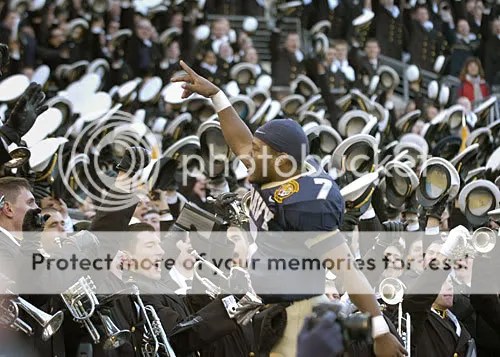

 It is true that going to a bowl game– any bowl game– was a bigger deal when there were fewer games to go to. But does anyone really think that the existence of the Emerald Bowl somehow diminishes the prestige of the Rose Bowl? Somehow I have a hard time imagining a coach saying, “Well we were hoping to get to the Sugar Bowl, but the GMAC Bowl is close enough!” Let’s look at it a different way. Navy has been to 5 straight bowl games, each of which would probably be a prime candidate for contraction in Heller’s mind. If Navy put it all together next year and got a bid to say, the Orange Bowl, do you think that it wouldn’t be a big deal? I mean, it’s just one more bowl game. There’s really nothing special about the Orange Bowl after you’ve been to a couple of Poinsettia Bowls, right? Yeah, right. I know that people want to guard against rewarding mediocrity, and I can understand that. Nobody likes the whole Little League, everyone-gets-a-trophy mentality. But that’s not what we have here. Mediocre teams aren’t going to the Orange Bowl. They’re going to less celebrated bowl games. The best teams still get rewarded with the best bowls. The prestige of the higher profile games hasn’t changed.
 The Birddog